I Had Plans This Weekend. Instead, I Cried Over a Monkey.


For those of you who went out and did real things this weekend... saw friends, ran errands, folded laundry ...I admire you.
I had plans too.
There were emails I meant to answer. A queue of articles I've been meaning to edit. Maybe even the radical idea of leaving the house.
Instead, I emotionally imprinted on a Japanese macaque named Panchi and ugly cried.
Repeatedly.
If you are not chronically online like me, here’s the backstory:
Panchi is a Japanese macaque (a “snow monkey”) living in a zoo in Japan. His mother abandoned him for reasons that aren’t fully documented (possibly illness or an inability to lactate) he carries a stuffed animal everywhere. He grooms it. Protects it. Cradles it. Falls asleep with it tucked under his chin.
He treats it like his Mommy.
And the internet has collectively melted.
Including me.
“You’re Anthropomorphizing.”
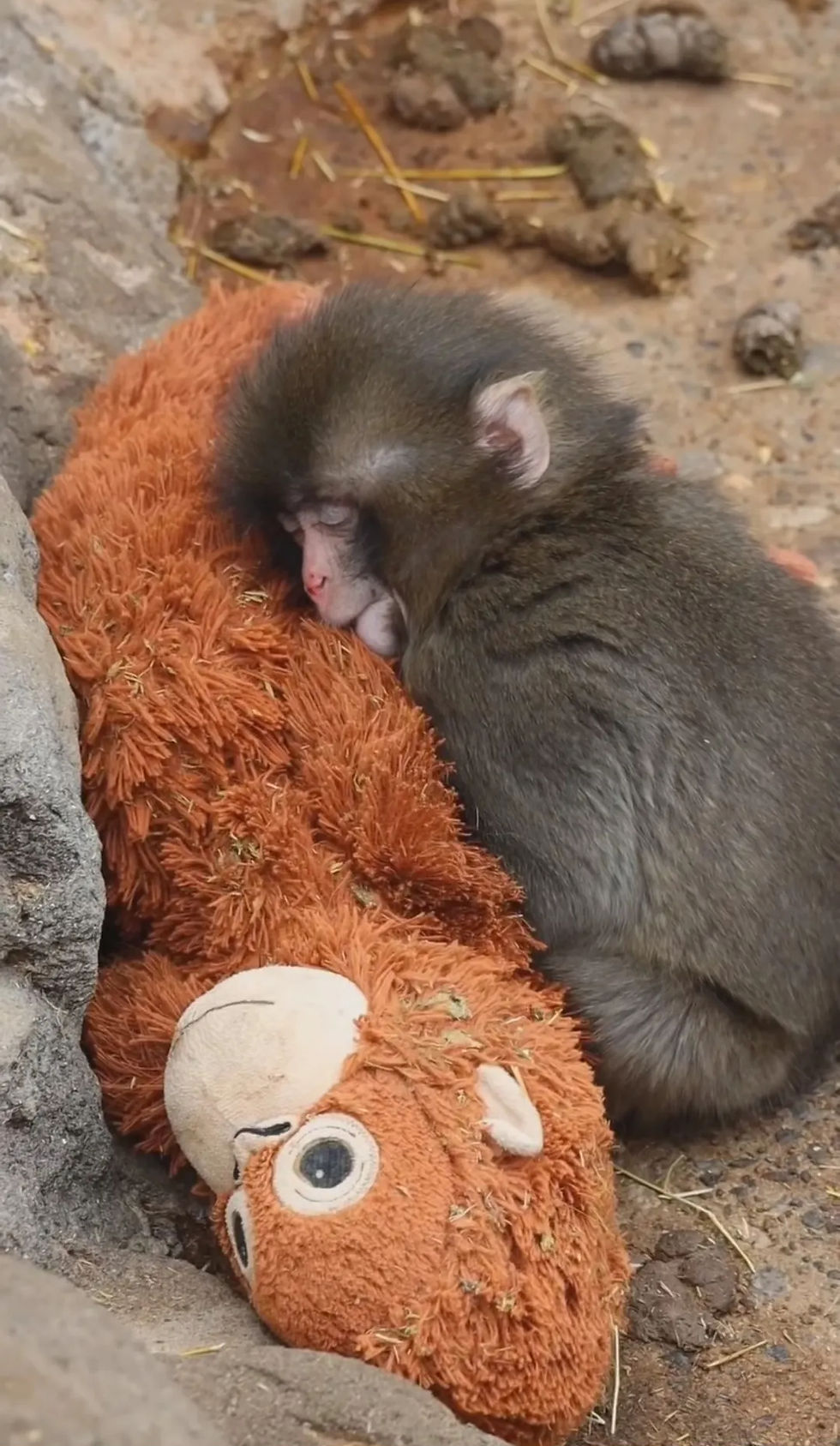
On Friday night, as I was deep in my feelings about this monkey, my husband laughed (kindly) and loudly accused me of always anthropomorphizing animals.
And look....full disclosure: you are never going to get me to stop. But that’s neither here nor there.
Yes, we should be careful not to project elaborate human narratives onto animals. But there is a difference between inventing fantasy and recognizing shared biology.
Attachment is not uniquely human.
It is mammalian.
We share nervous system architecture. We share oxytocin pathways. We share stress responses. We share the biological drive toward proximity and regulation.
When I see a macaque holding a soft object the way a mother would hold an infant, I am not assigning him a novel-length backstory.
I am recognizing attachment behavior.
And attachment is not poetry.
It’s physiology.
But here’s the part I want to defend more boldly:
Even when we anthropomorphize a little… what is that, really?
It’s empathy.
It’s our nervous system recognizing another nervous system.
It’s the instinct that says, I see something in you that feels familiar to me.
At the end of the day, aren’t we all mammals sharing this planet together?
Don’t we all seek warmth? Safety? Belonging?
Anthropomorphizing, at its best, isn’t delusion.
It’s connection.
It’s the refusal to pretend we are separate from the rest of the living world.
Maybe the real discomfort isn’t that we project humanity onto animals.
Maybe it’s that we don’t like being reminded we are animals too.
We Are Wired for Softness
In the 1950s, psychologist Harry Harlow conducted devastating experiments with infant rhesus monkeys. Given a choice between a wire surrogate that dispensed milk and a soft cloth surrogate that offered warmth but no food, the babies overwhelmingly chose the soft one.

They clung to comfort over calories.
When frightened, they ran to softness.
When stressed, they held tighter.
Studies of orphaned chimpanzees show better stress regulation and social integration when consistent caregiving is restored. Bonobos (our deeply affiliative cousins) regulate tension through grooming, eye contact, touch, and bonding behaviors that lower cortisol and increase oxytocin.
Connection regulates mammals.
Humans did not invent this.
The Lie We Tell Ourselves as Adults
And somewhere between the tears and those tiny fingers carefully grooming a stuffed animal, something else stirred.
Because yes ....he is heartbreakingly cute. But the tenderness isn’t just aesthetic.
It’s biological.
And this is where it gets uncomfortable.
We live in a culture that tells adults they shouldn’t need like that.
We call it clingy. We call it anxious. We call it codependent.
We worship independence. We glorify emotional self-sufficiency. We shame longing.
But you do not outgrow your vagus nerve. You do not spiritually transcend oxytocin. You do not evolve past the need for co-regulation.
Secure attachment doesn’t mean you stop needing people.
It means you trust someone will show up.
When that steadiness isn’t there, the nervous system protests.
Some of us cling. Some withdraw. Some pretend we don’t care.
But underneath every strategy is the same mammalian blueprint:
Find warmth. Find safety. Attach.
And Also… I Mean, Come On!
The way he tucks the stuffed animal under his chin.
The way he encircles himself with its limbs to that he can feel its embrace.
The seriousness with which he carries it — not play. Not performance. Care.
It’s unbearably tender.
Watching him feels like witnessing something ancient and unfiltered. A mammal refusing to override his wiring.
And maybe that’s why I cried.
Because somewhere along the way, we decided maturity meant suppressing that instinct.
But softness is not weakness.
It is inheritance.
So yes.
I had plans this weekend.
Instead, I stared at a macaque holding a stuffed animal and felt something sacred crack open in me.
And honestly?
I’m not sorry.


Comments